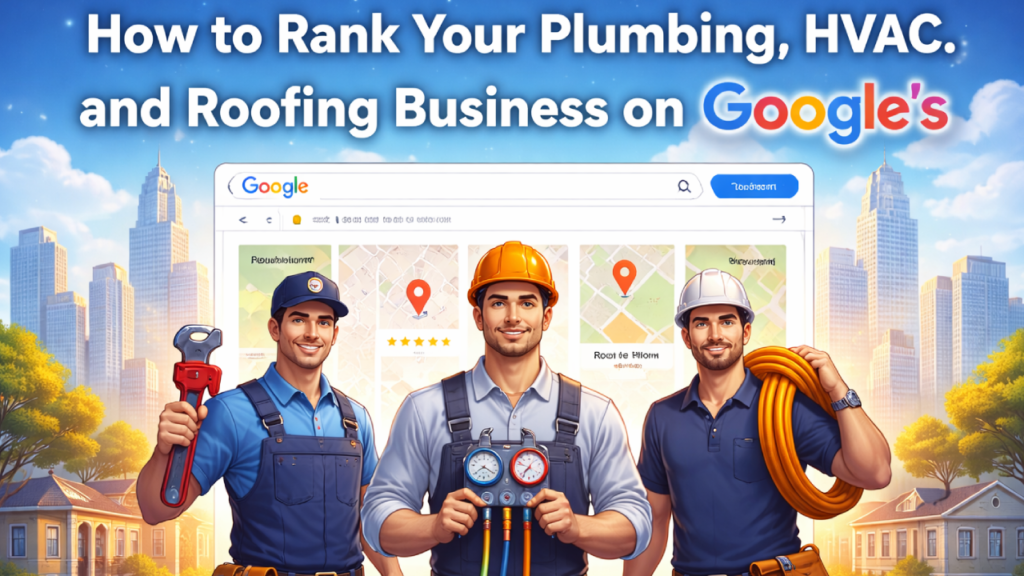
When a homeowner needs a plumber, HVAC technician, or roofer, they usually search Google with urgency. Searches like emergency plumber near me, AC repair in New York, or roof repair in Los Angeles are made by people who are ready to call and book a service.
If your business does not appear on Google’s first page, especially in Google Maps, you are losing high-value local leads to competitors who do.
Ranking a plumbing, HVAC, or roofing business on Google’s first page requires a smart local SEO strategy, strong service pages, trust signals, and content that matches how people search today. This guide explains exactly how to do that.
What Google’s First Page Means for Home Service Businesses
For service-based businesses, the first page of Google usually includes more than just websites.
You will often see Google Maps results showing local businesses, Local Services Ads in major cities like New York, Los Angeles, Chicago, Houston, Phoenix, Dallas, Miami, Atlanta, San Diego, and San Jose, and organic service pages below the map.
Your goal is to gain visibility in both Google Maps and organic results because that is where the highest converting local traffic comes from.
Step 01: Use the Right Keywords Homeowners Actually Search
Many contractors make the mistake of targeting broad keywords like plumbing services or HVAC companies. These terms are competitive and do not always convert.
Instead, focus on service based and location based keywords such as
- plumber in New York
- emergency plumber in Los Angeles
- AC repair in Houston
- HVAC installation in Phoenix
- roof repair in Dallas
- roof replacement in Miami
- HVAC contractor in Chicago
- roofing company in Atlanta
These keywords show clear intent and are commonly used by homeowners ready to hire.
At the same time, informational searches like why my AC is not cooling or signs of roof damage help build trust and visibility, especially in AI-driven search results.
Step 02: Create Individual Service Pages That Rank
Your website should not rely on one generic services page. Each major service needs its own dedicated page.
For example
- Emergency Plumbing Services
- Drain Cleaning
- Water Heater Repair
- AC Repair
- Furnace Installation
- Roof Repair
- Roof Replacement
Each service page should clearly explain what you offer, who you serve, and why customers should trust you.
A strong service page includes a clear headline, local relevance, customer benefits, trust signals like licenses and warranties, internal links to related services, and a short FAQ section.
This structure is essential for plumbing SEO, HVAC SEO, and roofing SEO success.
Get a Free Local SEO Consultation
Step 03: Use Service Area Pages to Cover Multiple Cities
If your business serves more than one city, service area pages help you rank locally without opening multiple locations.
For example, a roofing company in Texas might create pages for Dallas, Houston, Austin, and San Antonio. An HVAC company in California could target Los Angeles, San Diego, San Jose, and San Francisco.
Each service area page should include unique content that mentions the city naturally, explains the services offered there, and includes testimonials or job references when possible.
Avoid copying the same content across different cities. Google favors pages that provide real value for each location.
Step 04: Optimise Google Business Profile for Google Maps Rankings
For most plumbers, HVAC companies, and roofers, Google Maps is the biggest source of leads.
Your Google Business Profile should be fully optimized with the correct category, accurate service areas, complete service listings, high quality photos, and regular updates.
Reviews play a major role here. Businesses in cities like New York, Los Angeles, and Chicago often win Map rankings simply because they have more recent and higher quality reviews.
A well structured local SEO strategy makes it much easier to compete in Google Maps, even in competitive markets.
You can learn more about building long term visibility through a strong local foundation by exploring professional local SEO services designed for service based businesses.
Step 05: Build Trust with Reviews and Reputation
Reviews are not just for conversions. They directly impact local rankings.
Ask satisfied customers for reviews after completing jobs. Make the process simple by sharing a direct review link. Respond to every review professionally and naturally mention your service when appropriate.
For example, thanking a customer for choosing your AC repair service in Phoenix helps reinforce local relevance without sounding forced.
Step 06: Fix Citations and Business Information
Your business name, address, and phone number should be consistent everywhere online.
This includes Google Business Profile, Apple Maps, Bing Places, Yelp, Facebook, and local directories.
Inconsistent information can confuse search engines and reduce trust, especially for competitive local searches in large cities like Houston, Miami, or San Diego.
Step 07: Focus on Technical SEO That Supports Local Rankings
Technical SEO does not need to be complicated, but it does need to be clean.
Your website should load fast on mobile, use secure HTTPS, display click to call buttons clearly, and have simple navigation.
Schema markup for LocalBusiness and FAQs helps search engines and AI systems better understand your business and services.
Step 08: Build Local Authority with Backlinks
Backlinks still matter, especially when they come from relevant and local sources.
Good backlink opportunities include local suppliers, community organizations, chambers of commerce, sponsorships, and local news mentions.
These links help strengthen authority and support both organic and Maps rankings.
Step 09: Use Helpful Content to Capture Leads Early
Not every search leads to an immediate call. Many homeowners research before hiring.
Content such as why a water heater leaks, signs your AC needs repair, or how to identify roof storm damage helps build trust and keeps your brand visible.
This type of content works best when connected to a solid local SEO for home service businesses approach that links blog content to service and location pages.
Step 10: Turn Rankings into Calls and Booked Jobs
Ranking alone does not generate revenue. Your website must convert visitors.
Clear call buttons, short contact forms, trust signals, and visible service areas help turn traffic into leads.
Emergency focused messaging is especially effective for plumbers and HVAC companies.
How Long Does It Take to Rank on Google’s First Page
In many cases, Google Maps rankings improve within one to two months once profiles and reviews are optimized.
Organic rankings usually take two to four months depending on competition, city size, and consistency of effort.
Highly competitive cities like New York or Los Angeles may take longer, but steady progress is achievable with the right strategy.
Frequently Asked Questions
How can a plumbing business rank on Google’s first page
By optimizing service pages, Google Business Profile, reviews, citations, and local content.
Does local SEO work for HVAC and roofing companies
Yes. Local SEO is one of the most effective marketing strategies for HVAC and roofing businesses because searches are location based and high intent.
Is Google Maps more important than organic SEO
Google Maps often drives faster calls, while organic SEO supports long term growth and broader service coverage.
Do AI search results affect local contractors
AI results rely on trusted local sources. Well structured content and strong local signals improve visibility.
Final Thoughts
Ranking your plumbing, HVAC, or roofing business on Google’s first page is not about shortcuts. It requires clear service pages, city focused content, a fully optimized Google Business Profile, strong reviews, and a conversion focused website.
When these elements work together, your business gains consistent visibility in cities across the United States and attracts higher quality local leads.